

The platform

One API. Every developer workflow you need.

The Coastal Practice platform covers data ingestion, transformation, webhooks, and real-time streaming — all under a single authentication context and a single billing line.

Read the docs
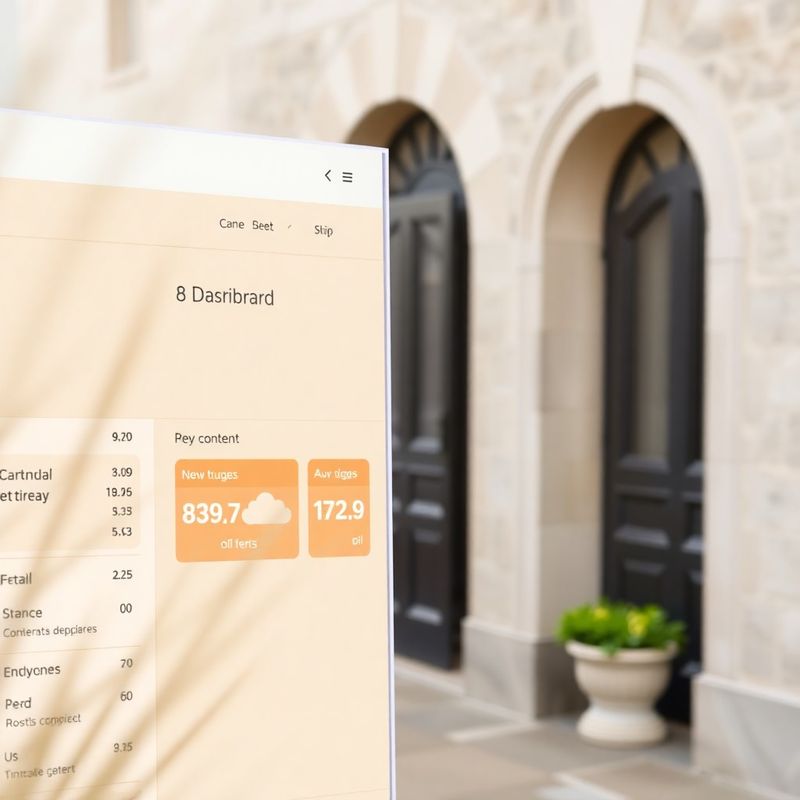
Overhead view of the Coastal Practice developer dashboard on a large monitor showing live API metrics

What the platform actually does

Coastal Practice provides a REST and WebSocket API for teams building data-intensive applications on the web. The core product has four surfaces: the Ingest API accepts structured and semi-structured payloads at up to 50,000 events per second; the Transform layer applies user-defined schemas and enrichment rules before data lands in your store; the Webhook engine fans out processed events to your downstream systems with configurable retry logic and dead-letter queuing; and the Streaming API maintains persistent connections for real-time consumers. Every surface shares the same authentication model, the same rate-limit headers, and the same error taxonomy — so once you learn one part of the system, the rest behaves exactly as you'd expect. All of this runs on infrastructure we operate ourselves inside EU jurisdiction, not on a third-party SaaS layer we don't control.

Platform capabilities in detail

Each capability is independently usable — you're not required to adopt the whole stack on day one.

Ingest API

Accept JSON, NDJSON, and Apache Avro payloads over HTTPS or a persistent gRPC stream. Batching is handled server-side: send individual events or bulk arrays up to 5MB per request. Delivery acknowledgement is synchronous — if you receive a 200, the payload is durable. Backpressure signalling uses standard HTTP 429 with a Retry-After header populated from your current quota window.
Transform layer

Write transformation rules in a subset of JSONata that we compile to a zero-dependency WebAssembly module — so rules run at the same latency as native code with no cold start. Rules are versioned, and you can preview the output of any rule against a stored sample payload directly from the dashboard before promoting to production.

Webhook engine

Fan-out to up to 50 downstream endpoints per event type. Configurable retry policy supports exponential backoff from 5 seconds to 24 hours. Failed deliveries land in a per-endpoint dead-letter queue you can inspect and replay from the dashboard or via the API. Webhook signatures use HMAC-SHA256 with a per-endpoint secret you rotate without downtime.

Streaming API

Maintain long-lived WebSocket connections consuming filtered event streams in real time. Filters are applied server-side using the same rule engine as the Transform layer, so you only receive bytes your client needs. Connection state survives a brief network interruption via a 30-second resume window — your client reconnects and picks up from the last acknowledged sequence number without replaying stale events.

A platform designed around the developer's day

From the terracotta-cream warmth of our dashboard UI to the terminal, every surface is designed to reduce context-switching.

“The Transform layer alone replaced about 400 lines of custom ETL code we'd been maintaining for two years. We migrated our Ingest and Webhook pipelines over a single sprint in November — the docs were so precise that we didn't need to raise a single support ticket during the migration. That is genuinely rare in my experience of third-party APIs.”

Tomás Ó Briain, Senior Backend Engineer, Cork

See the full API reference

Every endpoint, parameter, and error code — documented with working curl examples and annotated response payloads.

Open the docs